![[2026 Update] Head to Minamiboso in Winter! A Day Trip Driving Plan to Enjoy Spectacular Views, Strawberries, and All-You-Can-Eat Seafood](https://imagedelivery.net/0Xfr734EZhL-f9btSNh4FQ/uploads/article/01KEXH672R9D8EBMSS85QFC7AS.jpg/public)
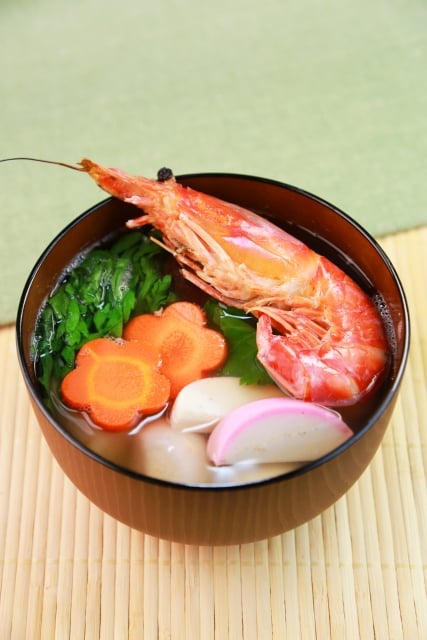



New Year's Day, welcoming the new year in Japan, is the most important time of the year for the Japanese people. Families and relatives gather together to eat osechi ryori (New Year's food), and go to visit shrines for the first time in the year. Among these celebrations, there is one special dish that is almost always served on the dinner table: ozoni (rice cake soup) .
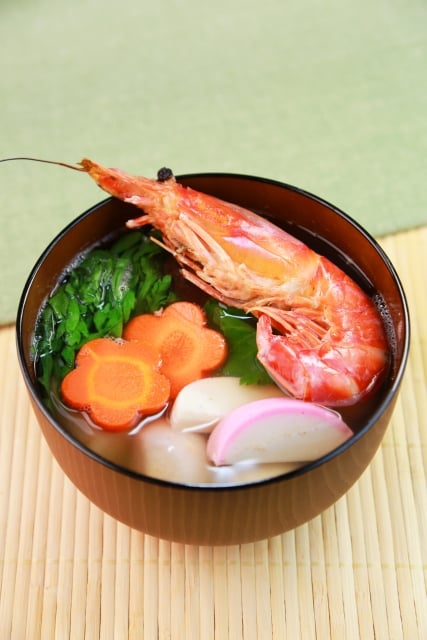
Ozoni is a warm soup dish made by simmering rice cakes (omochi) as the main ingredient, along with vegetables, meat, and seafood. By eating this ozoni, people pray for good health and happiness for the year ahead. However, did you know that the taste of this dish, ozoni, actually varies greatly depending on the region in Japan?
In particular, the appearance and taste of ozoni in Japan's two major cultural regions, Kanto (Tokyo and surrounding areas) and Kansai (Osaka, Kyoto, Kobe, and surrounding areas), are so different that they are practically unfamiliar. In this article, we would like to introduce you to the diversity of Japanese culture and the beautiful details of each region through the differences in ozoni.
Also check out " Osechi, Mochi, and Toshikoshi Soba! A Complete Guide to Japanese Gourmet New Year's for Foreign Visitors "
https://tenposstar.com/ja/articles/r/3881
Ozoni is mainly made up of the following three elements. These three elements vary slightly depending on the region.
Mochi shape and cooking method: Should the mochi be "square" or "round"? Also, should it be "baked" or "boiled"?
Seasoning (dashi): Should the soup be "strong soy sauce flavor" or "white miso flavor"?
Ingredients: What vegetables, meat, and seafood are used? Let's take a look at ozoni in Kanto and Kansai, focusing on these three differences.
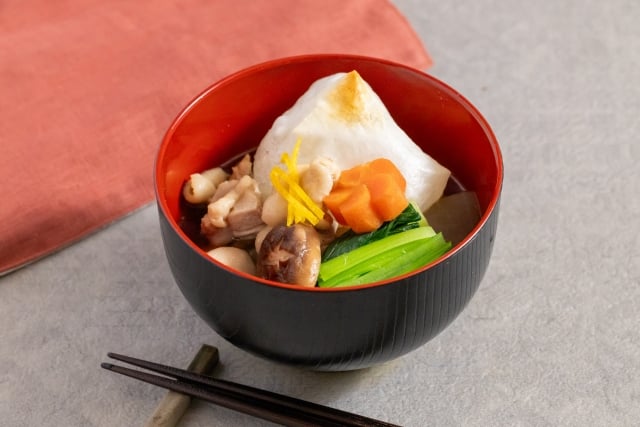
Ozoni in the Kanto region, especially in Tokyo, is said to have been influenced by samurai culture and the history of the Edo period.
Characteristics of Mochi: Square Mochi (Kakumochi) and "Baking"
・Shape: In the Kanto region, square mochi (kakumochi) is the norm.
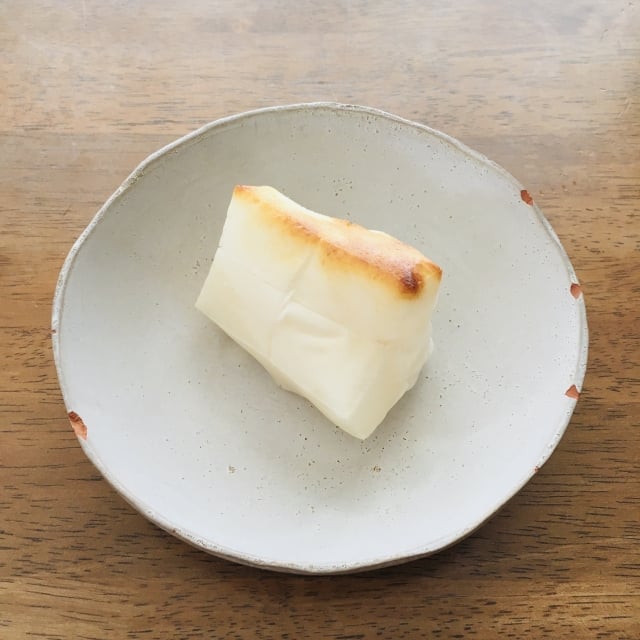
Reason: During the Edo period, the population of Edo (Tokyo) increased, and it was more efficient to make large amounts of mochi in a large lump and then cut them into squares with a knife than to roll each one by hand, which meant that a lot of mochi could be made quickly.
• Cooking method: Always toast the square mochi in a toaster oven before adding it to the zoni. ◦ Reason: Toasting the mochi makes the surface fragrant and helps prevent it from falling apart when cooked.
Seasoning: Clear soup with dark soy sauce
• Taste: The basic clear soup is a slightly dark colored "sumashi-jiru." • Dashi: The broth is made from bonito flakes and seasoned with dark soy sauce and salt. Although it is dark in color, it has a refreshing taste and a strong aroma.
Main ingredients: chicken and komatsuna (Japanese mustard spinach)
• Ingredients: The main ingredients are chicken, the green vegetable komatsuna, and root vegetables such as carrots.
• Meaning: It is said that chicken represents the good fortune of "ruling the household" and komatsuna represents the good fortune of "making a name for oneself." Although it is simple, each ingredient has its own meaning.
Summary: Kanto-style ozōni is a simple, rational dish that, like samurai culture, allows you to enjoy the crisp flavor of soy sauce.
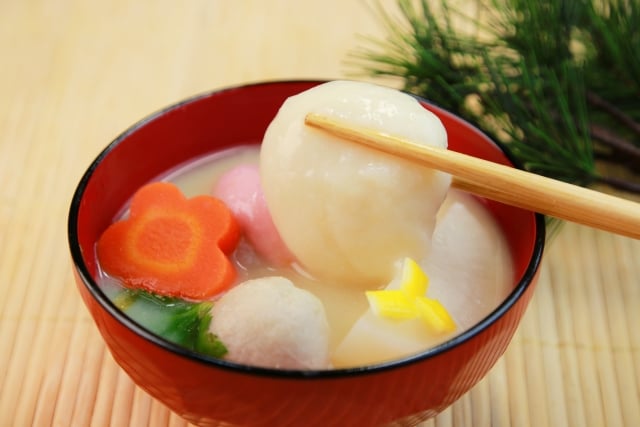
Ozoni in the Kansai region, especially in Kyoto and Osaka, is strongly influenced by the culture of the nobility and merchants.
Characteristics of mochi: Round mochi (marumochi) and "stewed"
• Shape: In Kansai, the most common type of mochi is round, known as "marumochi."
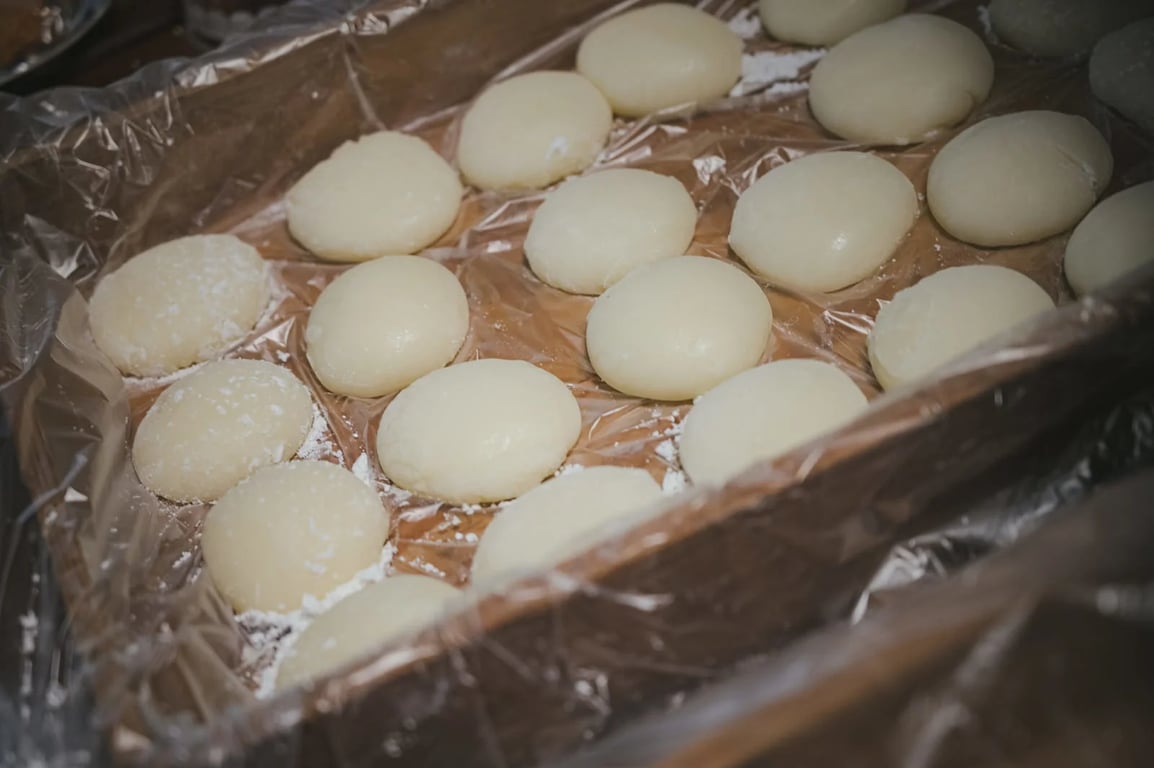
• Reason: The round shape is considered auspicious, symbolizing wishes for harmony and freedom from conflict. It is also a vestige of a culture that values traditional methods of making things.
• Cooking method: The round rice cakes are boiled in broth without being grilled.
• Result: The boiled round rice cakes become soft and gooey, and the flavors of the broth and miso soak into them.
Seasoning: White miso with a refined sweetness
• Taste: The base is a white, slightly thick "white miso" flavor. • Stock: Kyoto white miso is used in stock made from kelp and bonito flakes.
This white miso has a low salt content and the strong sweetness of the rice koji, giving it a very mellow and refined sweetness.
Main ingredients: Kashiraimo (head yam) and Kintoki carrot (red carrot)
• Ingredients: Head potato: This is the parent taro of the taro plant, and is considered a lucky charm that brings about success in life by "becoming someone's head."
• Kintoki carrots: Unlike the red carrots of the Kanto region, these are long, slender, and dark-colored carrots, giving them a festive red and white hue.
• Common ingredients: Daikon radish and taro are also added, but the main feature of this dish is that the ingredients are simmered in miso until soft.
Kansai-style ozōni is a mellow dish that is visually gorgeous, like the culture of the nobility, and allows you to enjoy the gentle sweetness of white miso.
The small differences in ozoni are not just differences in the food, but are filled with the thoughts, history, and cherished values of the people living in that region.
Attraction 1: A culture that embraces diversity
Japan is a long, narrow island nation, but within its territory lies a diverse culture. It is said that there are hundreds of different ozoni recipes in Japan, not just in the Kanto and Kansai regions. • Near the sea: Contains seafood (salmon roe and oysters).
• Near the mountains: Abundant mountain produce (mushrooms and wild vegetables) is available.
• Kagawa Prefecture: Mochi filled with anko (sweet red bean paste) and dipped in white miso.
This is proof that the Japanese people have accepted diversity and coexisted while respecting each other's cultures. The rich variety of food cultures, as if there were several countries within one country, is one of Japan's great charms.
Charm 2: The cherishing of special occasions
Ozoni is a dish eaten on special occasions, or "hare no hi."
• Kanto clear soup: Soy sauce clear soup is different from everyday miso soup and expresses the "purity" needed to welcome the New Year.
• White miso of the Kansai region: Sweet and thick white miso is used on auspicious occasions and to express feelings of celebration. In this way, Japanese people have a culture of preparing special dishes on special occasions to draw a line under something and truly celebrate a new start. Ozoni is a part of the Japanese heart, cherishing these special days.
Charm 3: "Love for the community" that carries on traditions
In recent years, many young people have moved to Tokyo or Osaka, but they always return to their hometowns for New Year's and eat local ozoni with their families. The strong commitment to "our ozoni has to be like this" is an expression of the deep attachment that Japanese people have to the place where they grew up and their desire to cherish the traditions passed down from their ancestors. Ozoni is the taste of hometown and the very memory of family.
If you have the opportunity to experience Japanese New Year, be sure to try making "Ozoni."
Experience 1: Try a taste comparison!
If you live in Japan, we recommend trying both Kanto and Kansai ozoni.
Try the soy sauce flavored square mochi (grilled) in Tokyo.
Try boiled round mochi rice cakes flavored with white miso in Kyoto and Osaka.
When you compare these two, you'll be surprised at how different they are, even though they're both New Year's rice cake dishes. It's sure to be a fun experience trying to find which flavor suits your taste best.
Experience 2: Try making it yourself
Just before New Year's, square and round mochi, as well as white miso and dark soy sauce, are readily available in Japanese supermarkets. Look up recipes online and try making your own original ozōni. In particular, experiencing the process of making dashi stock and whether to boil or bake the mochi will allow you to truly experience the depth of Japanese food culture.
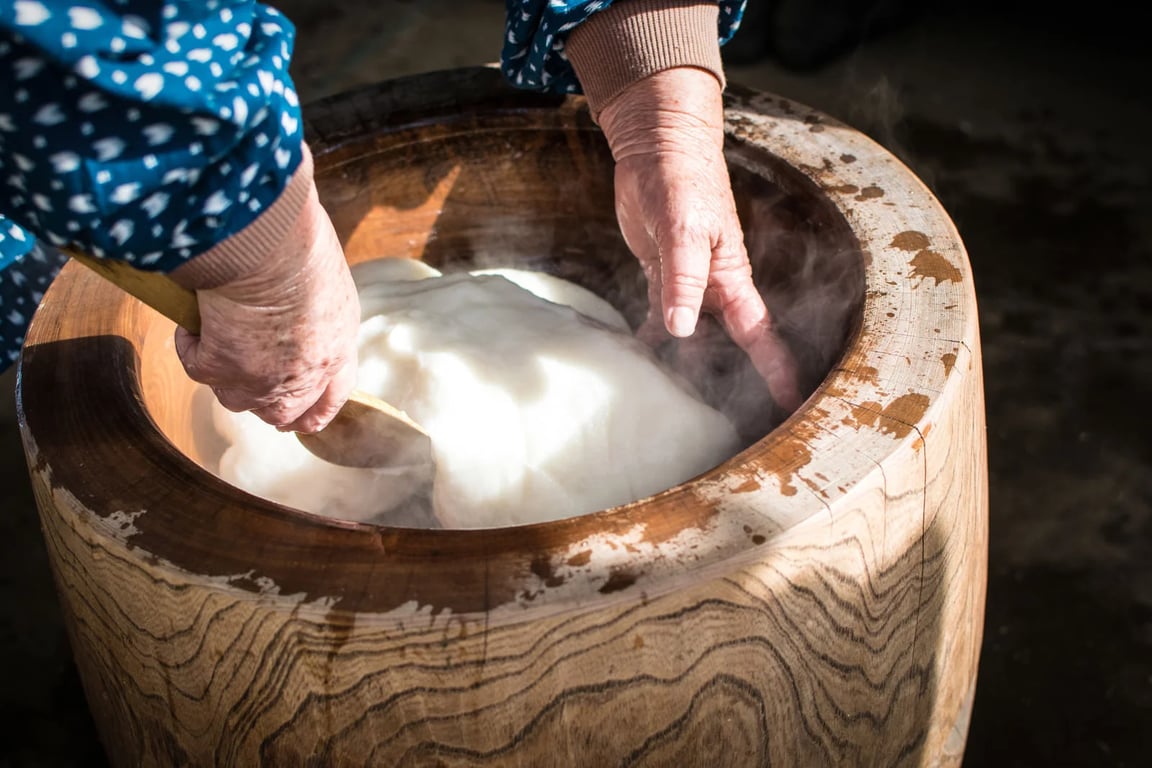
We've explored the great appeal of Japanese culture through the small theme of "the differences between ozōni in Kanto and Kansai." Square and round rice cakes, clear soy sauce soup and sweet white miso soup. These two contrasting flavors adorn the same day, New Year's. This is proof that Japanese people do not reject "differences," but rather have the richness of mind to respect and enjoy them. If you ever come to Japan, please try the ozōni of each region. It is not just delicious food, but a heartfelt "cultural flavor" that conveys the history of the region, the wishes of the people, and the warm bonds of family.
Also check out "What is the meaning behind the food in the tiered box? How to enjoy osechi 10 times more"
![[Good luck!] What is the meaning behind the food in the tiered box? How to enjoy "Osechi" 10 times more](https://imagedelivery.net/0Xfr734EZhL-f9btSNh4FQ/uploads/article/01KDYWF2Y7WJJWX9BSYP1W0WST.webp/public)